Medusa is one of the most recognizable figures in Greek mythology—but her story is often misunderstood. Known for her snake-covered hair and the ability to turn people to stone, she is usually remembered as a monster. But the truth behind the Medusa myth is far more complex.
Who Was Medusa in Greek Mythology?
In early Greek mythology, Medusa was not a monster at all.
She was a mortal woman and a devoted priestess of Athena, known for her beauty and loyalty. Medusa lived a disciplined life within Athena’s temple, serving the goddess with devotion and honor.
Unlike the other Gorgons, Medusa was human—making her story one of transformation rather than birth.
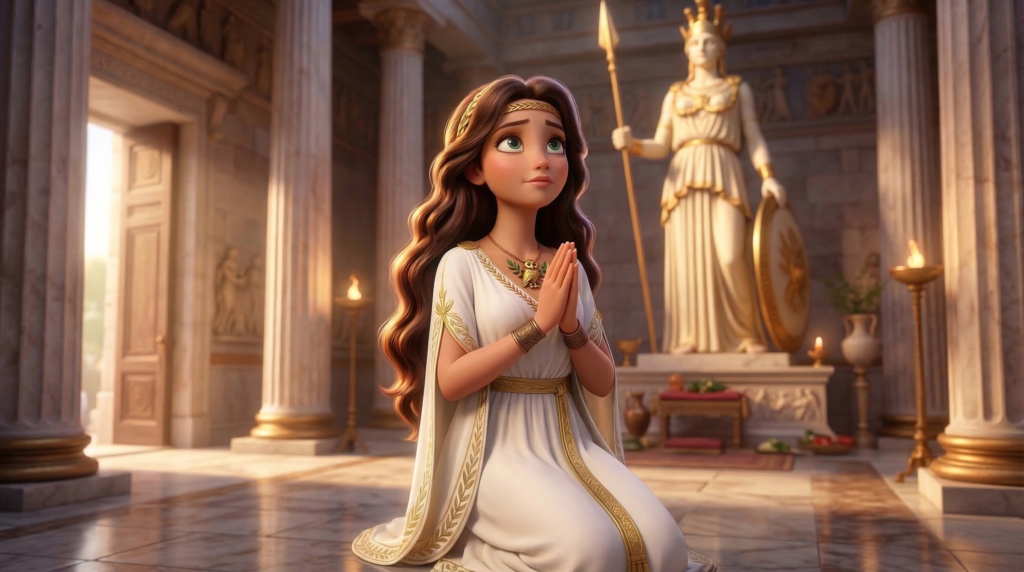
“Some say Medusa was never the monster…
but a victim of the gods, punished for a fate she did not choose.”
Why Was Medusa Cursed?
According to the most widely told version of the myth, Medusa’s life changed after an encounter with Poseidon inside Athena’s temple.
What followed was not mercy—but punishment.
Athena transformed Medusa into a Gorgon, a creature with snakes for hair and a gaze that could turn anyone to stone.
This moment became the defining turning point in Medusa’s story.
Yet even today, many interpretations question this event:
Was Medusa truly at fault?
Or was she punished for something beyond her control?
The Transformation into a Gorgon
After the curse, Medusa was no longer seen as a priestess, but as a creature to be feared.
Banished and isolated, she became a symbol of terror across ancient Greece. Travelers spoke of her as a monster lurking in the shadows, her gaze bringing instant death.
But beneath that legend lies a deeper question:
Was Medusa truly a monster… or a victim of divine power?
Perseus and the Death of Medusa
The hero Perseus was sent on a quest to kill Medusa—a task considered nearly impossible.
With the help of the gods, Perseus used a mirrored shield to avoid her gaze. In a single decisive moment, he struck, beheading Medusa without ever looking directly at her.
Even in death, her power remained.
Her head became a weapon, capable of turning enemies to stone, and was later used by Perseus in battle.
The Meaning Behind the Medusa Myth
The story of Medusa is more than just a tale of monsters and heroes.
It reflects themes of:
- Power and punishment
- Justice and injustice
- The consequences of divine authority
In modern interpretations, Medusa is often seen not as a villain, but as a tragic figure—someone transformed by forces beyond her control.
A Different Perspective on Medusa
For centuries, Medusa has been portrayed as something to fear.
But today, her story is being re-examined.
Some see her as a symbol of:
- Survival
- Strength
- Misunderstood power
Her myth continues to evolve—proving that even the oldest stories can still change depending on who tells them.
Why the Medusa Myth Still Matters Today
The story of Medusa continues to resonate because it explores timeless themes:
- Power and control
- Justice and punishment
- Perspective and truth
Her story reminds us that myths are not just about gods and monsters…
They are about how stories are told—and who gets to tell them.
The Medusa Myth in Modern Culture
The Medusa myth continues to influence modern culture, appearing in films, books, art, and storytelling across generations.
From ancient sculptures to modern reinterpretations, her image has evolved from a symbol of fear to one of mystery and power.
Today, the Medusa myth is often used to explore deeper ideas about identity, justice, and transformation—proving that even ancient
legends can remain relevant in a modern world.
Learn more about the Medusa myth from trusted sources like Encyclopedia Britannica.
Watch our full cinematic retelling of the Medusa myth here.