

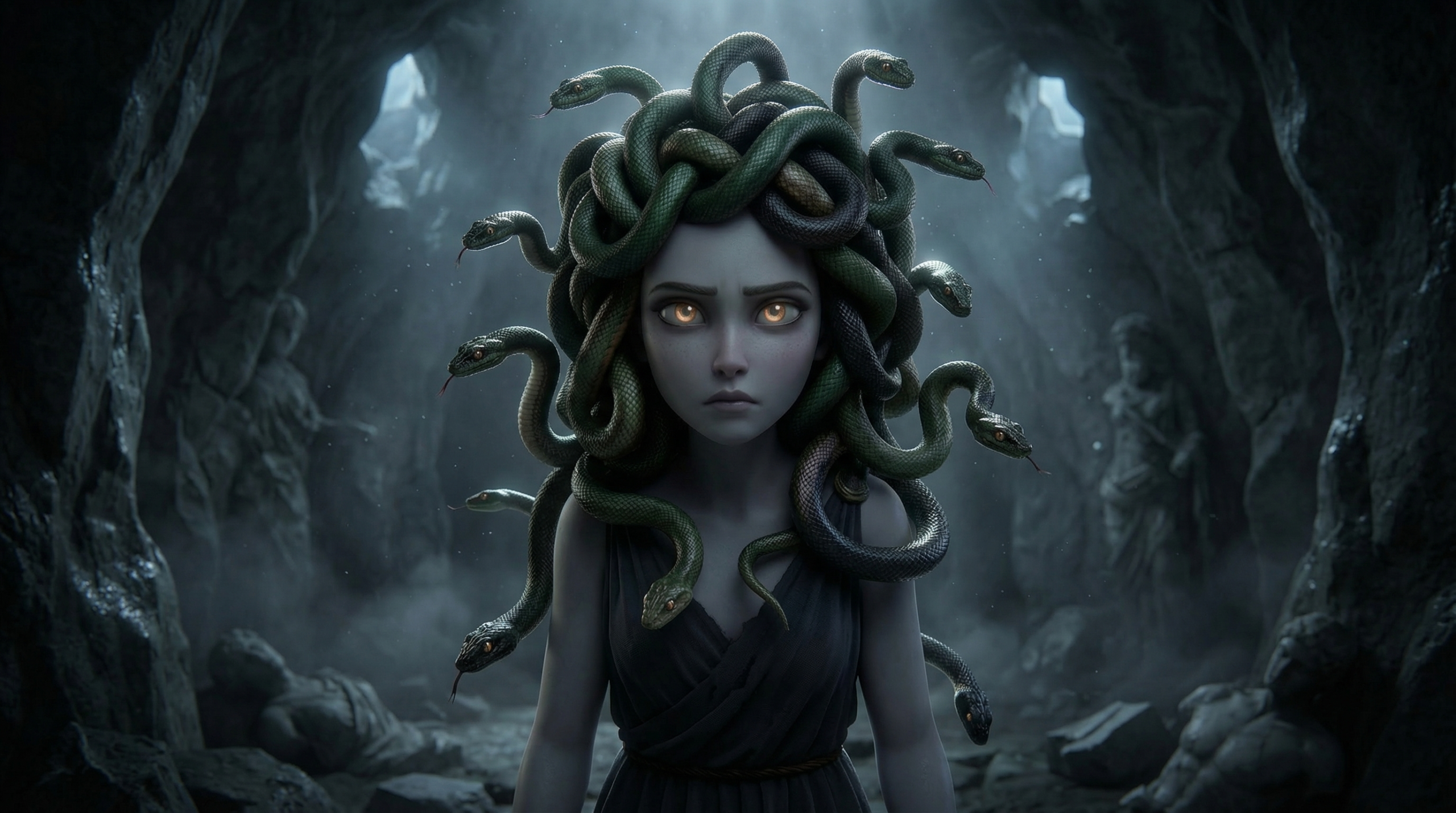
Medusa is one of the most iconic and misunderstood figures in Greek mythology. Once a priestess of Athena, she was known for her beauty and devotion within the sacred temple. But after an encounter with Poseidon, her life changed forever leading to a punishment that would define her story across ancient myths.
Transformed into a Gorgon, Medusa was cursed with snakes for hair and a gaze that could turn anyone to stone. Over time, her legend became a central part of Greek mythology, often told through the story of Perseus, the hero sent to defeat her. Yet many interpretations suggest a deeper truth—one that reveals Medusa not as a monster, but as a victim of the gods and a symbol of power, fear, and injustice.
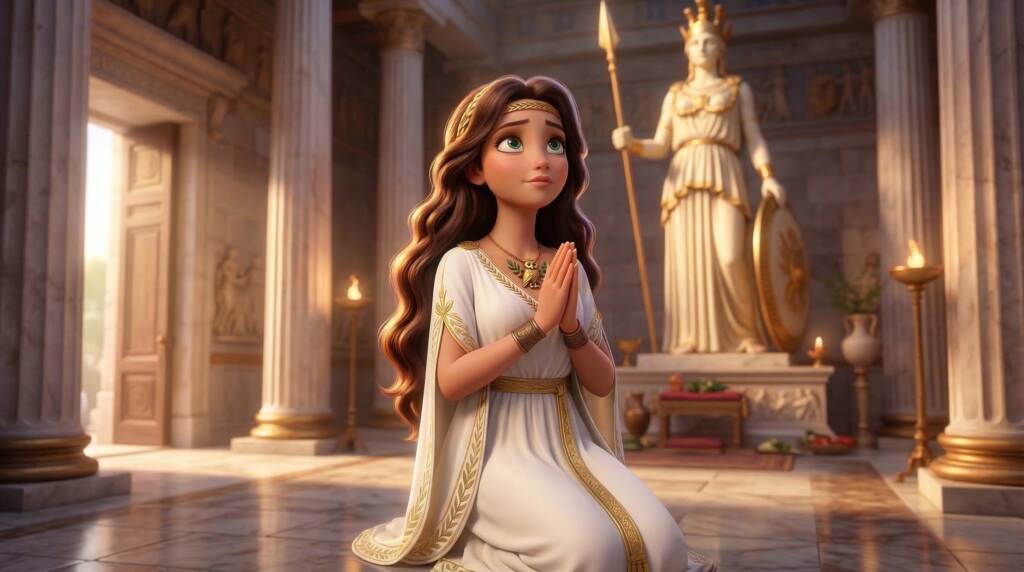
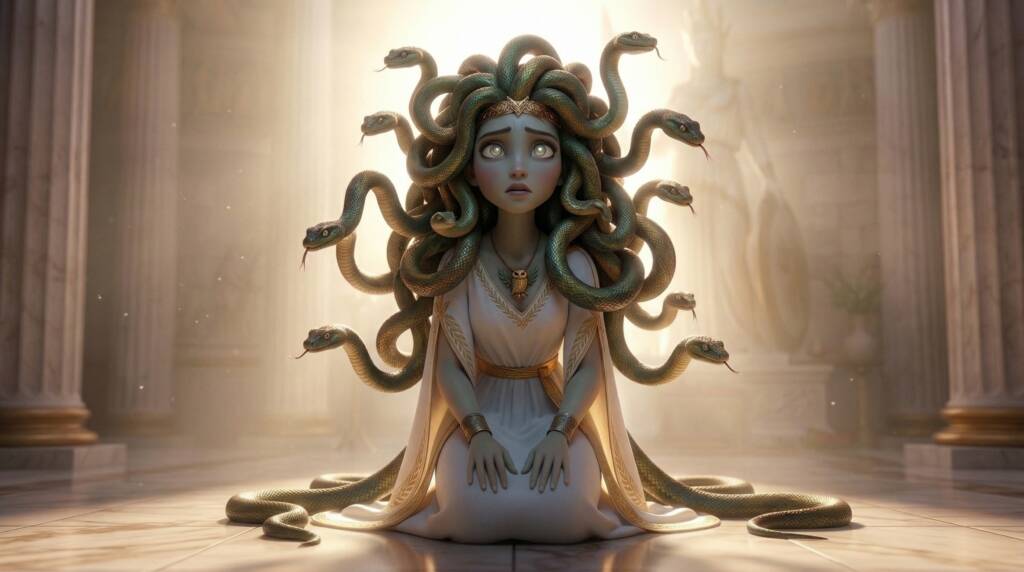
Before the curse, Medusa was not feared—she was admired. In the temple of Athena, she lived a life of devotion, her beauty and presence often spoken of in whispers across ancient Greece. But in mythology, even the most sacred places were not beyond the reach of the gods.
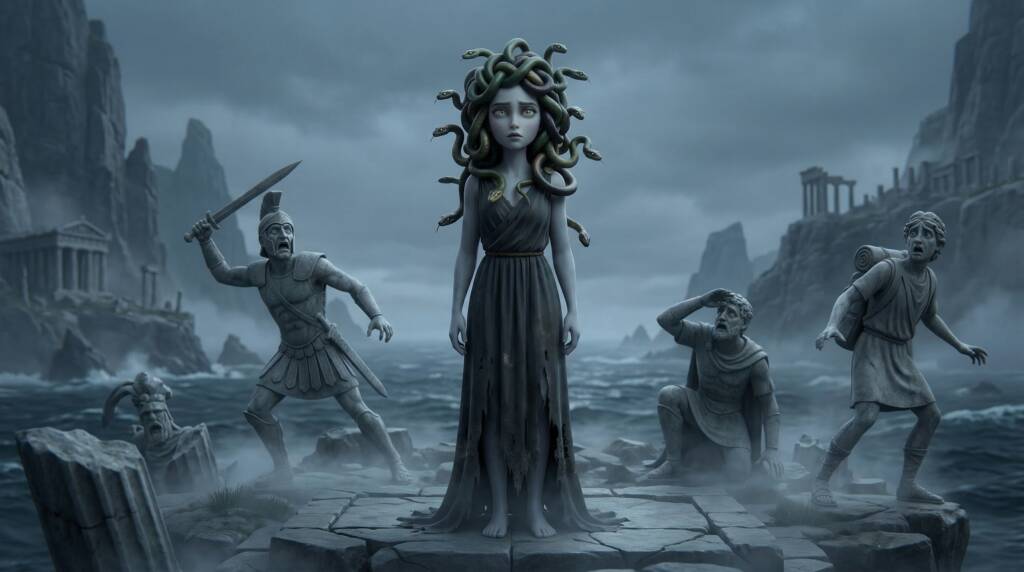
The transformation was not just physical—it was absolute. Her hair became living serpents, her form twisted into something unrecognizable, and her gaze turned into a weapon. From that moment forward, Medusa was no longer seen as a priestess, but as a Gorgon—one of the most feared creatures in Greek mythology.
Over time, her story was shaped by those who survived it. Travelers spoke of a monster lurking in the shadows, a figure whose eyes brought instant death. Yet beneath the legend of Medusa lies a deeper question—was she truly a monster… or simply a victim of divine power beyond her control?
watch the story unfold
The Curse Begins
The story of Medusa has been told for centuries—but rarely from her perspective.
In many versions of Greek mythology, she is remembered only as a monster defeated by Perseus. Yet behind that legend lies a deeper narrative—one shaped by power, punishment, and the will of the gods.
Her transformation was not just a curse, but a turning point that redefined her place in myth forever.
Learn more about Medusa in Greek mythology from trusted sources like Encyclopedia Britannica.